Contour


GAROSERO GANGNAM
Address asymmetry, elasticity, and puffiness all at once
Jeongan Acupuncture
Acupuncture stimulates facial acupoints and muscle tissues—addressing areas of tension or laxity—to induce collagen production within the skin.
With minimal discomfort, this acupuncture treatment naturally corrects facial muscle asymmetry and enhances facial contours.
It also remodels the fascial layer—a key factor in skin aging—to improve elasticity, minimize pores, and reduce wrinkles, restoring a beautiful, youthful complexion.
This method is also used to correct facial asymmetry and treat facial paralysis (Bell's palsy).
GAROSERO GANGNAM
Effects of Jeong-an-chim (Facial Rejuvenation Acupuncture)

Facial Asymmetry Correction
We perform a customized treatment that uses acupuncture to stimulate the SMAS fascia layer—which envelops the facial muscles—thereby releasing tightened fascia and restoring optimal muscle tension.

Complexion Improvement
It promotes blood circulation within facial fascia and muscles, boosting skin regeneration and elasticity while facilitating the elimination of waste products to create a clear, radiant complexion.

Improving Skin Elasticity
Jeongan Acupuncture improves blood circulation in the facial area, boosting the skin's natural ability to regenerate. It also stimulates collagen production.
GAROSERO GANGNAM
Jeong-an Acupuncture
Concerns Addressed by Jeong-an Acupuncture
- I’m self-conscious about my facial asymmetry whenever I take photos.
- The corners of my mouth droop, making me look tired.
- My face is severely swollen every morning.
- My cheeks are sagging, making my face look larger.
- I’m concerned about my double chin.
- I want to reduce swelling quickly after plastic surgery or cosmetic procedures.
- My facial expressions became unnatural after getting skin Botox.
- My jaw joint clicks and hurts.
- I want to improve skin elasticity from within, rather than just getting a massage.
- I want my makeup to sit better on my skin.
- My skin is dry and prone to facial redness.
GAROSERO GANGNAM
Does Jeong-an Acupuncture use the same type of needles as acupuncture for the body?

Garosero Korean Medicine Clinic (Gangnam) uses 'metal-allergy-free' silver-nano acupuncture needles.
Since the needles are applied to the face, we use silver-nano coated needles to prevent itching caused by metal allergies in patients with sensitive skin.
GAROSERO GANGNAM
Comparison: Botox vs. Fillers vs. Facial Acupuncture
| Category | Characteristics of Facial Rejuvenation Acupuncture |
|---|---|
| Method | Stimulates the fascia to promote natural regeneration |
| Effect | Effects tend to accumulate gradually with repeated treatments |
| Treatment Burden | Uses specialized facial needles; minimal side effects and pain; allows for immediate return to daily activities |
GAROSERO GANGNAM
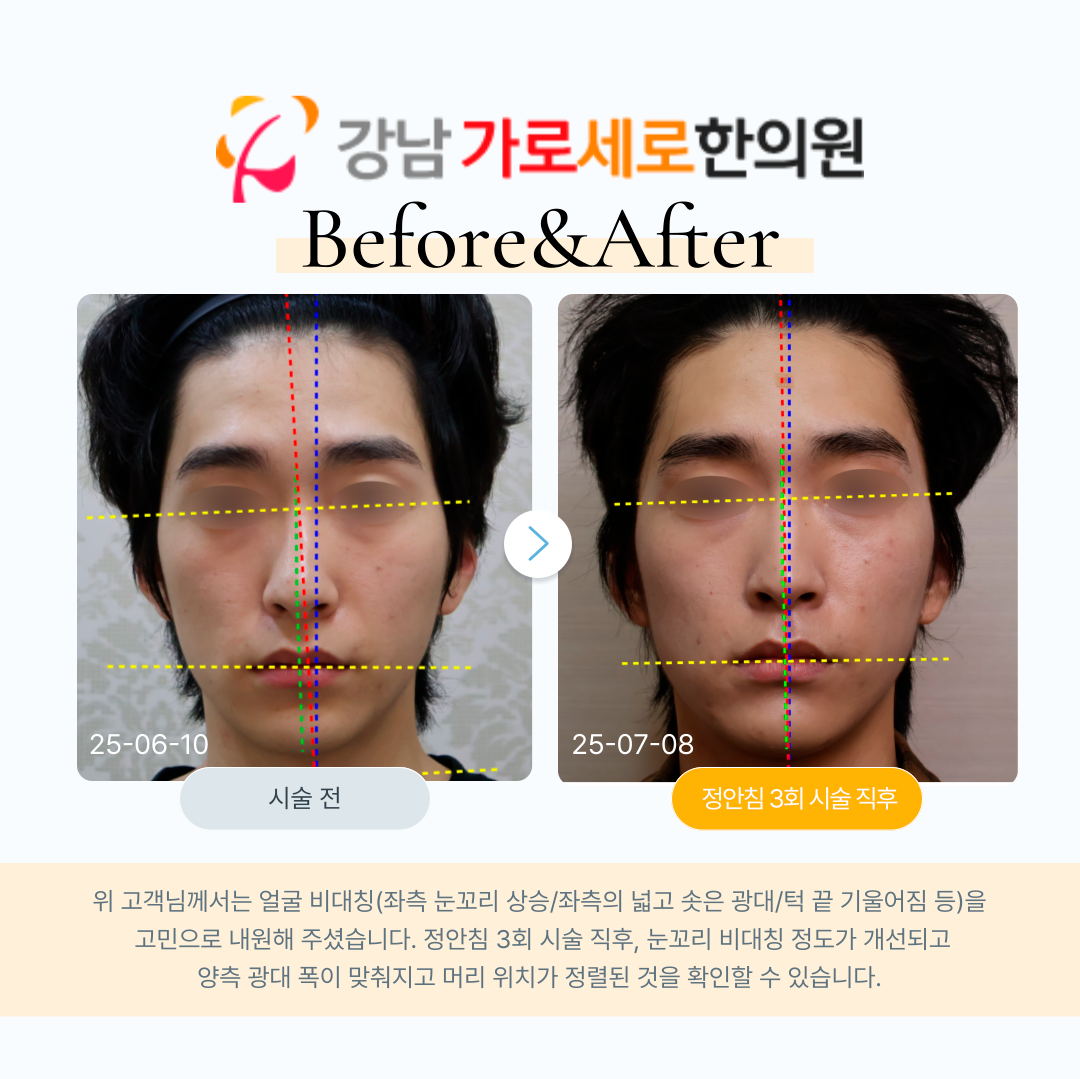
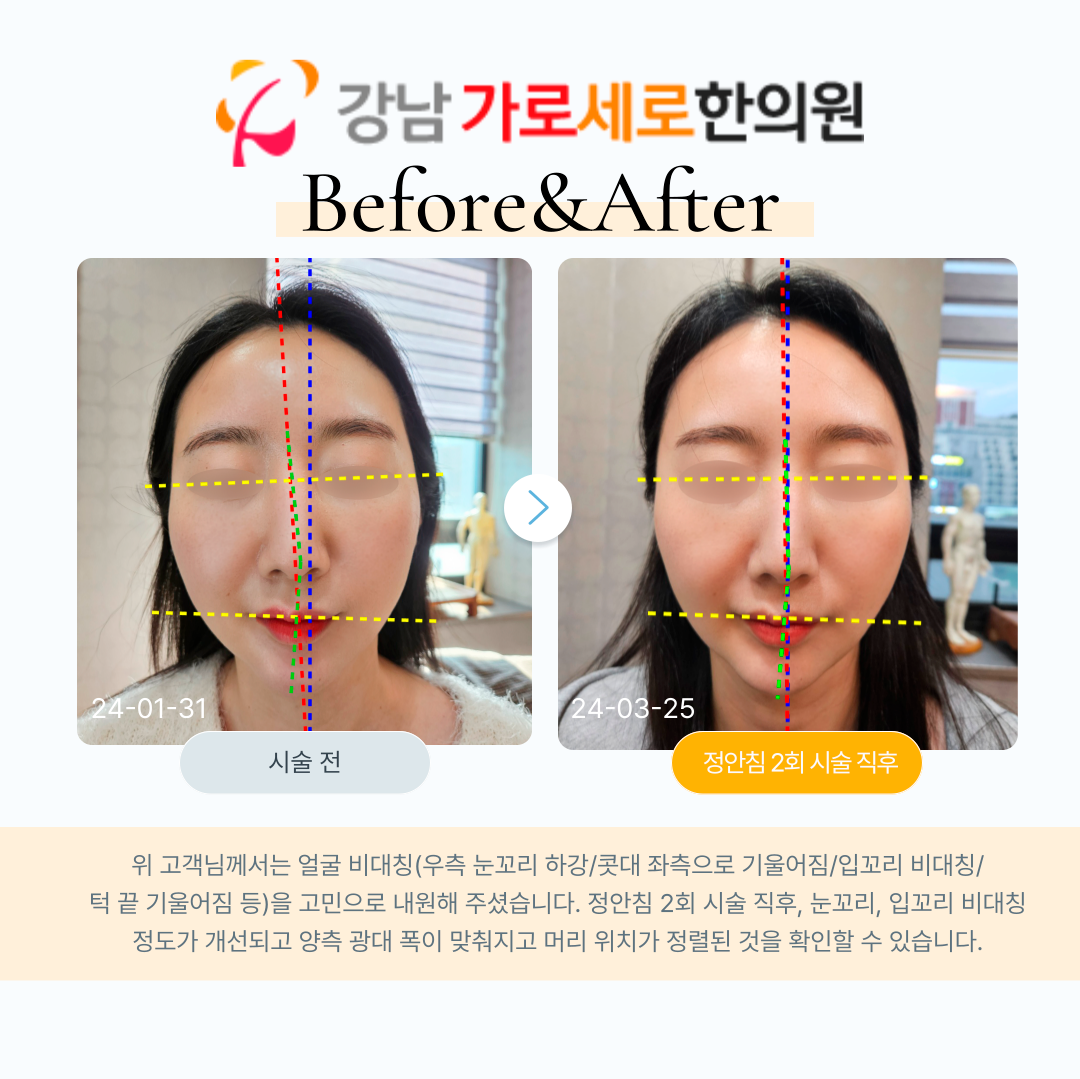
Check out the reviews for Jeongan-chim!
GAROSERO GANGNAM
Precautions After Jeong-an-chim Treatment
- For 2–3 days after the procedure, please avoid activities that may irritate the skin, such as drinking alcohol, smoking, using saunas, swimming, and strenuous exercise.
- After the procedure, use a regenerating cream and moisturizer, and drink plenty of water.
- Apply sunscreen when going outdoors and even while indoors.
"You see immediate results after the treatment, so satisfaction is higher. My face looks brighter, and the puffiness completely disappears." — Verified Review
GAROSERO GANGNAM
Asymmetry Correction Package
Unlike standard dental splints designed to protect the teeth, the Temporomandibular Joint Balance Therapy (TBT) appliance helps restore the central position of the jaw joint and re-establish whole-body balance—extending from the jaw and neck to the shoulders and pelvis.
When wearing the appliance, you should not clench your teeth tightly; instead, maintain a comfortable, relaxed position with the jaw slightly open. It should be worn for a total of at least 8 hours per day.
You may wear it either continuously or in intervals during the day or night, depending on your lifestyle; it does not have to be worn exclusively while sleeping.
GAROSERO GANGNAM
TMJ Imbalance: A Trigger for Various Health Issues
TMJ imbalance exacerbates facial asymmetry as well as musculoskeletal and metabolic symptoms. Leaving it untreated poses a threat to your health.
Prevention and proper management are essential.
- You hear a clicking sound in your jaw or feel a catching sensation when opening your mouth.
- You tend to chew on only one side, and the left and right sides of your face look asymmetrical.
- You suffer from chronic, unexplained headaches and stiffness in the neck and shoulders.
- You snore heavily and still feel tired upon waking up in the morning.
- You experience tooth sensitivity or have been told that you grind your teeth.
Temporomandibular joint (TMJ) imbalance is found in many people even without specific pain, yet the rate of treatment remains very low.
If you are experiencing symptoms, now is the time to consider treatment. What happens if it is left untreated?
The temporomandibular joint (TMJ) is the joint located just in front of the ear where the skull and the lower jawbone meet. If this single joint becomes misaligned, the body's overall balance—extending from the jaw to the neck, shoulders, and pelvis—is disrupted.
Potential Problems If Left Untreated
-
Worsening Facial Asymmetry
Increased facial asymmetry and changes in the jawline
-
Chronic Headaches & Neck Pain
Persistent neck stiffness and heavy shoulders
-
Sleep Disorders
Snoring, teeth grinding, and sleep apnea disrupt deep sleep
-
Digestive & Autonomic Issues
TMJ stress can affect the autonomic nervous system and overall well-being
-
Difficulty Losing Weight
Chronic stress and poor sleep raise cortisol levels, making weight loss more difficult
While the prevalence of temporomandibular joint (TMJ) imbalance among adults reaches approximately 70% of the total population, the rate of treatment remains extremely low.
If you are experiencing symptoms, now is the time to seek treatment.
How does it work?
The human temporomandibular joint (TMJ) is not merely a joint for chewing food.
This joint, where the skull meets the mandible, serves as a reference point for whole-body balance, extending from the cervical and thoracic spine down to the pelvis.
The core of TBT treatment lies in simultaneously addressing four key areas of structural imbalance: Cranium → Spine → Pelvis → TMJ.
What changes occur throughout the body?
Once the temporomandibular joint (TMJ) is restored to its optimal central position, the following changes occur sequentially:
- Relief from jaw pain, clicking sounds, and limited mouth opening
- Reduction of chronic tension in the neck and shoulders
- Improvement of facial asymmetry (restoration of balance between left and right masticatory muscles)
- Expansion of airway space → Improvement in snoring, sleep apnea, and rhinitis
- Enhanced sleep quality → Restoration of overall physical condition and concentration
- Improved spinal and pelvic alignment
01
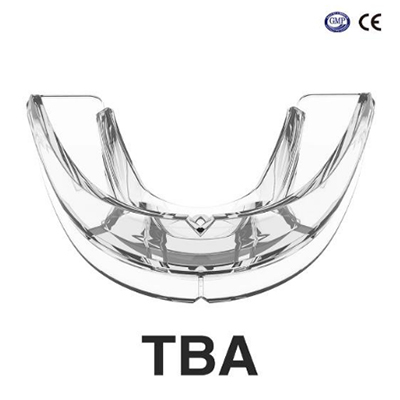
Treatment 01 TBT TMJ Balancing Appliance ABA Appliance
The ABA appliance precisely guides the lower jaw into the most comfortable and stable central position (Centric Relation). Once the jaw finds its proper alignment, tension in the connected areas—including the neck, shoulders, spine, and pelvis—begins to release.

02
Treatment 02Jeongan Acupuncture
Relaxes the masticatory muscles around the temporomandibular joint and the cervical fascia, rapidly stabilizing the effects of the appliance.
It also directly contributes to correcting facial asymmetry.
03
Treatment 03 TBT Corrective Chuna
Structurally corrects whole-body imbalances extending from the jaw and cervical spine to the pelvis.
Uses Chuna therapy to resolve musculoskeletal imbalances that cannot be addressed by appliances alone.
GAROSERO GANGNAM
Lifestyle Habits
Temporomandibular joint (TMJ) imbalance exacerbates facial asymmetry as well as musculoskeletal and metabolic issues. If left untreated, it poses a threat to your health; therefore, prevention and proper management are essential.
Please avoid this
- Hard or tough foods, chewing gum
- Habit of chewing on only one side
- Resting the chin on the hand
- Sleeping face down
Please do it this way
- Use your smartphone at eye level
- Minimize bending your head down
- Wait for natural improvement regarding adaptive reactions
GAROSERO GANGNAM
Storage




Rinse with lukewarm water after each use
Gently wash once a day using a neutral detergent (detergent may be used)
Dry in the shade, then store in the case
Once a week, place the device in a mug of water and microwave for 30 seconds. (30 seconds is sufficient, as overheating may cause deformation.)
GAROSERO GANGNAM
Proofreading
To enhance treatment effectiveness, you will visit the clinic at 1- to 2-week intervals for fine-tuning.
This phase is crucial to the treatment, involving precise adjustments to the appliance's position, occlusion, and pressure points.
If necessary, combining treatments such as facial acupuncture, TBT Chuna (manual therapy), or pharmacopuncture to relax the masticatory muscles and cervical fascia can accelerate stabilization.
Self-exercises should be performed gently and without pain.
GAROSERO GANGNAM
Please contact us or visit the clinic immediately in the following cases:
- Pain becomes suddenly severe
- Persistent locking or catching sensation when opening the mouth
- Persistent tooth tenderness
- Injury or bleeding of the oral mucosa
- Deformation, breakage, or loss of the appliance
Most cases are resolved through mediation, and unauthorized repairs are prohibited.
GAROSERO GANGNAM
Combining TMJ corrective appliances, Jeong-an acupuncture, and corrective Chuna manual therapy helps improve TMJ symptoms, facial asymmetry, and nasal conditions.
"My snoring has decreased by 90%. Since my airway is clearly kept open, I can feel myself breathing much more easily—which is a huge relief, especially since I also suffer from rhinitis." — Verified Review
"My wife used to struggle to sleep because of my snoring, but she says I barely snore at all now that I wear the device. Thanks to that, I finally got a good night's sleep—and even got a morning kiss, something that rarely happens!" — Verified Review
Temporomandibular Joint (TMJ) Correction Device (IBA) FAQ
-
Is it uncomfortable to sleep with the oral appliance?
It may feel tight at first, but most people adjust within 1–2 weeks. Many users report that their snoring returns when they sleep without it.
-
Do I need to receive facial acupuncture as well?
The oral appliance can be effective on its own, but combining it with facial acupuncture may help relieve jaw muscle tension more quickly.
-
My dentist told me not to open my mouth too wide. Can I still do TMJ stretches?
It is recommended to perform the stretches regularly while wearing the TMJ appliance, along with swallowing exercises.
-
How long should I wear it to see improvement?
It varies from person to person, but for faster improvement, wear it for as long as possible—ideally 16 hours or more per day.
-
How long do I need to continue wearing it?
It should be worn for life. Just as eating a full meal today does not mean you skip meals tomorrow, the aging process continues every day. Think of wearing the IBA as daily maintenance to help maintain proper alignment.
-
My pain gets worse after wearing the oral appliance. Does this mean something is wrong?
As noted in the instructions provided, discomfort may initially increase. Once you get through this adjustment period, improvement may progress more quickly. To help shorten the period of discomfort, practice cervical gravity stretching regularly.
-
How is this oral appliance different from over-the-counter splints?
OTC products are generally made without precise consideration of freeway space or the optimal chewing position of the mandible in all directions. For this reason, they may not provide the same level of precision as a custom-designed appliance.
-
How is it different from a dental splint prescribed by a dentist?
Dental splints are typically designed based on the concept of centric occlusion, while the IBA is designed based on centric relation. The IBA therefore takes a different approach from the initial design stage, focusing on the ideal position of the mandible.
-
My mouth became sore within 10 minutes of wearing the TMJ appliance.
This may happen if you bite or suck on the appliance too strongly. Keep your bite light and relaxed while wearing it.
-
My jaw and head hurt so much within a minute that I can't keep the appliance in. What should I do?
This may indicate that your jaw is highly sensitive. Try wearing it for about 10 seconds at a time, removing it briefly, and repeating. Frequent short sessions may help you gradually adapt.
-
My jaw dislocates easily. Should I still perform jaw stretches with full force?
Jaw dislocation may occur when the jaw opens asymmetrically. The intraoral balance appliance is designed to help restore symmetry of the mandibular condyles. Although dislocation may occur during the early stages of exercise, continued IBA use together with jaw stretching and cervical gravity stretching may help improve stability over time.
-
The appliance is turning white. Is something coming out of the material?
The white marks are friction marks caused by unconsciously biting or chewing the appliance. As long as it is not torn, you can continue using it.
-
Do I really need to do cervical gravity stretching?
Cervical gravity stretching should be performed consistently while wearing the IBA, gradually increasing the duration of the exercise. This is intended to support cervical function and the body's overall recovery process.
GAROSERO GANGNAM
Premium Lifting Equipment
Opus Dual Lifting
This is a high-output device utilizing High-Intensity Focused Ultrasound (HIFU) technology.
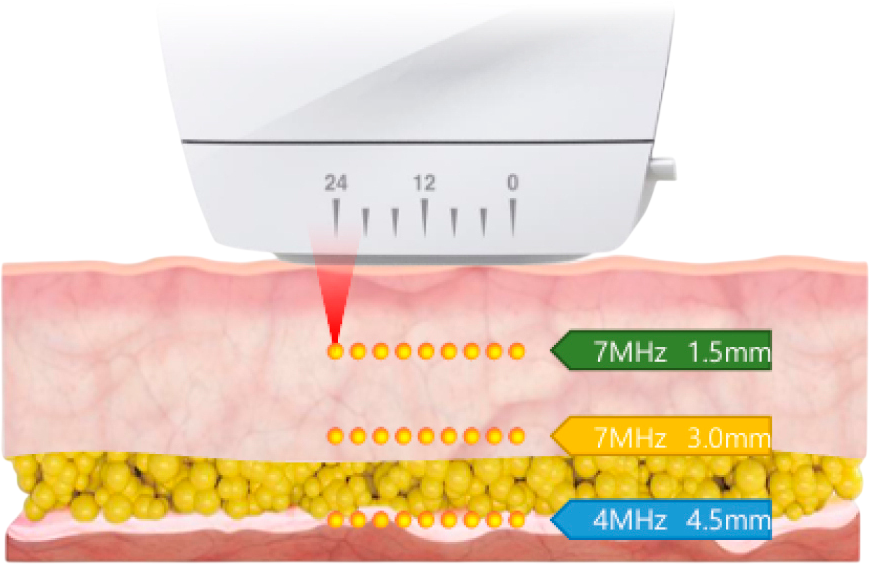
By focusing high-intensity ultrasound energy at frequencies of 4MHz and 7MHz, it rapidly contracts the SMAS layer (fascia) and delivers a lifting effect that restores elasticity from deep within the skin.
As a non-invasive procedure, it minimizes damage to the epidermis while creating stable coagulation points at the desired depth, thereby reducing pain.
Additionally, the RF Multi-Needle system precisely inserts microneedles deep into the skin to stimulate collagen regeneration and support the skin's natural recovery and renewal processes.
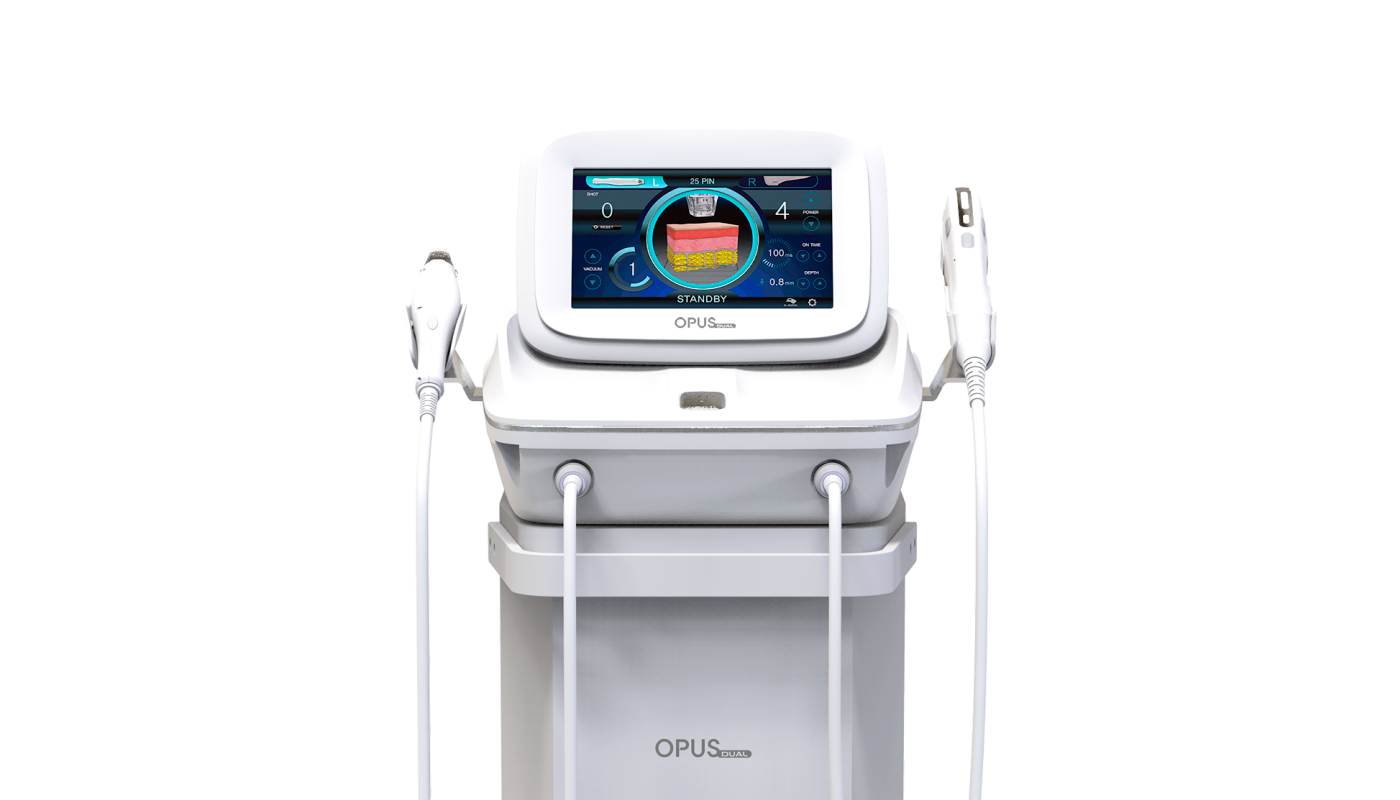
OPUS DUAL is a device with proven performance and safety, having obtained both MFDS approval and CE MDD certification for medical devices.
GAROSERO GANGNAM
HIFU
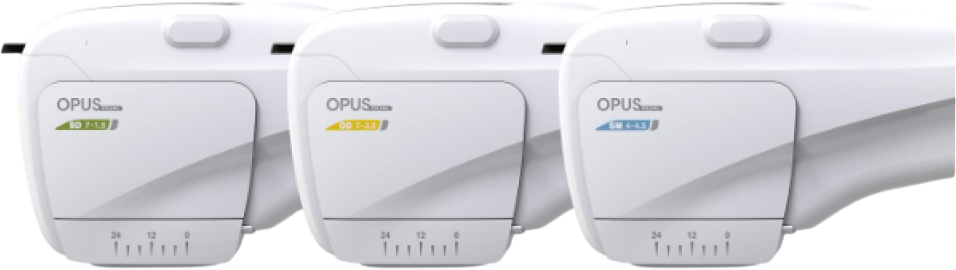
With a variety of OPUS DUAL cartridges, treatments can be tailored to individual skin thickness and condition, allowing for versatile application based on the depth of specific skin layers and the skin's state.
The range of available tips enables treatment on both thick and thin skin.
GAROSERO GANGNAM
Principles of HIFU Treatment
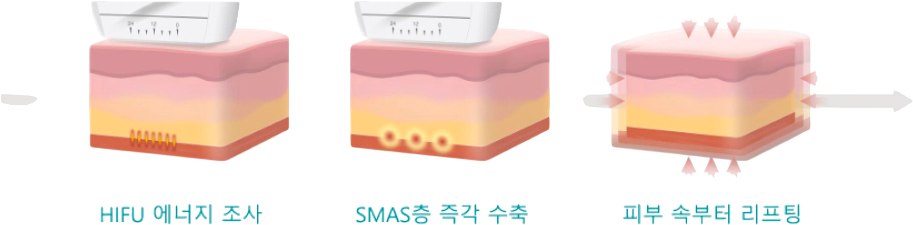
OPUS DUAL HIFU creates thermal coagulation points in the SMAS (superficial musculoaponeurotic system) layer at a depth of 4.5mm, triggering a wound-healing response and contracting skin tissue; this promotes natural collagen regeneration and delivers a lifting effect from deep within the skin.
GAROSERO GANGNAM
HIFU 시술 안내
| Procedure Time | 20 minutes |
|---|---|
| Downtime | None |
| Recommended Sessions | 5 sessions at 3-week intervals |
| Anesthesia | Not required |
| Daily Activities | Resume immediately after treatment |
| Results | Immediate results with continued improvement for up to 3 months as collagen regenerates |
GAROSERO GANGNAM
HIFU
Recommended for...
- Those wishing to improve skin elasticity
- Those concerned about fine facial lines
- Those wanting to improve elasticity in both the deep layers and the surface of the skin
- Those wishing to correct an uneven facial contour
- Those desiring a V-line lift with minimal disruption to daily life
- Those who have avoided lifting procedures due to a fear of pain
- Those with a sagging jawline caused by a loss of facial elasticity
GAROSERO GANGNAM
Precautions After HIFU Treatment
- For one week after the procedure, please avoid activities or products that may irritate the skin or delay recovery, such as drinking alcohol, smoking, saunas, swimming, strenuous exercise, exfoliating scrubs, and whitening skincare products (containing ingredients like Vitamin C or retinol).
- For 1–2 weeks after the procedure, use regenerative creams and moisturizers, and drink plenty of water to care for and protect your sensitized skin.
- Be sure to apply sunscreen before going outdoors for 1–2 weeks following the procedure.
GAROSERO GANGNAM
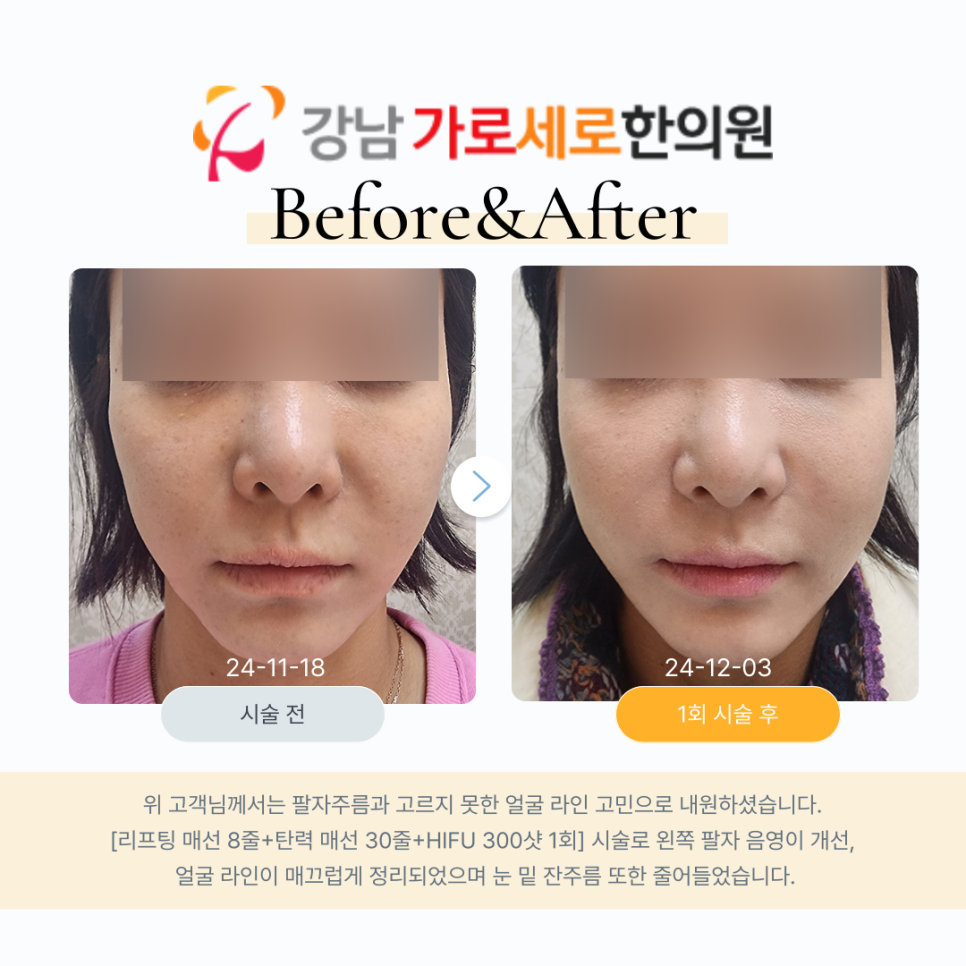
Check out the HIFU reviews!

GAROSERO GANGNAM
RF Multi-Needle Treatment Principle

Thermal damage & needling-induced damage → Fibroblast proliferation → Collagen regeneration
GAROSERO GANGNAM
RF MULTI NEEDLE
Recommended for...
- Those with enlarged pores who wish to minimize them
- Those with pitted acne scars
- Those wishing to reduce fine lines
- Those concerned about skin aging
- Those seeking both improved skin texture and a lifting effect
- Those desiring improved elasticity from deep within the skin
GAROSERO GANGNAM
Precautions After RF Multi-Needle Treatment
- To allow the heat from the high-frequency treatment to linger in the skin, avoid washing your face with cold water; instead, wash gently with lukewarm water.
- Bruising, scabs, or flaking may occur after the procedure; do not forcibly remove them—allow them to heal and disappear naturally.
- For one week following the procedure, avoid activities that may irritate the skin, such as drinking alcohol, smoking, using saunas, swimming, strenuous exercise, using scrubs, or applying skin-whitening products.
GAROSERO GANGNAM
Effects of RF Multi-Needle Treatment

Pore & Acne Improvement
Creates micro-injuries in the skin to stimulate collagen regeneration, helping improve acne scars and enlarged pores.

Redness & Complexion Improvement
Radiofrequency energy stimulates collagen regeneration, helping reduce redness and improve overall skin tone.
Improved Skin Elasticity
Stimulates collagen regeneration to help restore firmness and elasticity to tired skin.
"You see immediate results after the treatment, so satisfaction is higher. My face looks brighter, and the puffiness completely disappears." — Verified Review
GAROSERO GANGNAM
Wild Ginseng Contouring Shot
Recommended for...
- Those wishing to improve their V-line by addressing issues like a double chin or excess cheek fat
- Those with a face that appears large or lacks defined contours
- Those with protruding cheek areas due to excess fat
- Those desiring a slimmer, more refined facial appearance
- Those with prominent nasolabial folds caused by excess cheek fat
- Those seeking a safe procedure using reliable solutions with no side effects
GAROSERO GANGNAM
Wild Ginseng Contour Shot Treatment Information
| Procedure Time | 5 minutes |
|---|---|
| Downtime | None |
| Recommended Sessions | 3–5 sessions |
| Anesthesia | Not required |
| Daily Activities | Resume immediately after treatment |
| Results | Fat cells begin to shrink after 3 weeks |
- V-Line
- Double Chin
- Reduction of unwanted facial fat
- Improved lymphatic circulation & waste elimination
- Safe pharmacopuncture developed by the Korean Immuno-Pharmacopuncture Society and the Society of Korean Medicine for Obesity Research
Get a consultation right now.
- 20 years of expertise in skin care and aesthetics
- Private treatment rooms
- Immediate return to daily activities
- 1-minute walk from Seoul Nat'l Univ. of Education Station
 Book via Naver
 Quick WhatsApp Consultation


